 (847) 392-2141
 121 S. Wilke Rd, Ste 120 Arlington Heights, IL 60005-1510
 Payment Portal
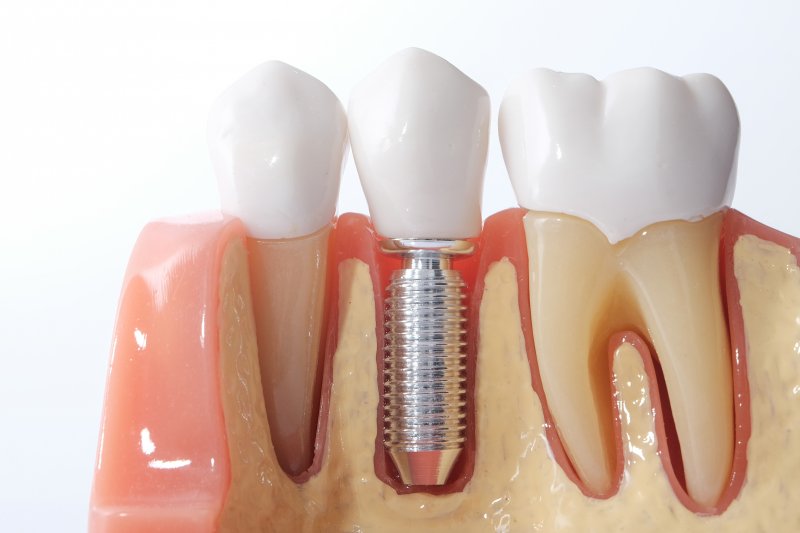
Saving your natural teeth is always the better option, one that your dentist will try to accomplish in every situation. However, when this isn’t possible, dental implants are the next best option after extraction. They are highly durable and can be used just like natural teeth. However, despite their great strength, many patients continue to ask the same question: do they hold up as well as regular enamel?
The Truth About Dental Implants
Enjoying a natural smile is the best option for long-term oral health; however, when problems arise, it’s important that you have choices that will mimic your regular teeth as much as possible. This is where dental implants come in.
A Strong Jawbone Means a Durable Smile
Having a dense jawbone is essential, whether you have natural teeth or dental implants. This is the foundation of your smile; without it, you can face bone resorption and facial collapse.
Your dentist will determine the density of your jawbone during a consultation. If it is below the desired level for successful placement, they will recommend a bone graft. This requires using bone tissue (real or synthetic) and integrating it with the existing material.
Over time, the two will come together to create a stable base that adequately supports dental implants, allowing them to be used the same way as regular teeth.
Titanium Mimics Natural Tooth Roots
Research shows that tooth enamel is considered the hardest substance in the body; however, since it cannot be recreated, using titanium is the next best option.
Cheaper dental implants are available on the market, but they often lack durability, causing them to break easily and ultimately fail. With titanium implants, the material fuses without issue (in most cases) because of its biocompatibility.
This means that, although no natural tooth enamel remains, titanium implants can provide a strong foundation for your smile. They can even deliver the same stimulation to the bone to prevent resorption over time.
Dental Implants Can Last
When you consider how dental implants compare to natural teeth, you’ll discover that they are the best solution when it comes to longevity. While enamel can decay, become damaged, and develop infections, permanent prosthetics cannot, which means they are likely to last longer than other similar solutions.
While it is possible to keep your natural teeth for a lifetime, you will likely experience problems along the way. When it happens, it’s always best to seek restorative treatment. If that proves unsuccessful and you want the closest thing to your regular smile, choose dental implants.
About the Author
Dr. Jeffrey Seredynski earned his dental degree at Midwestern University College of Dental Medicine – Illinois and now leads Arlington Smiles Dental Studio alongside Dr. Douglas. Partnering with local implant specialists, he and our team can ensure that your smile remains strong and long-lasting once dental implants are put in place. If you want your new smile to mimic the strength of your old one, contact us at (847) 392-2141 to schedule a consultation with our team.